
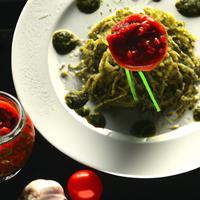
1 serving (250 grams) contains 350 calories, 12.0 grams of protein, 10.0 grams of fat, and 60.0 grams of carbohydrates.

Log this food in SnapCalorie

Nutrition Information
Calories |
330.2 | ||
|---|---|---|---|
% Daily Value* |
|||
| Total Fat | 9.4 g | 12% | |
| Saturated Fat | 1.9 g | 9% | |
| Polyunsaturated Fat | 0 g | ||
| Cholesterol | 4.7 mg | 1% | |
| Sodium | 566.0 mg | 24% | |
| Total Carbohydrates | 56.6 g | 20% | |
| Dietary Fiber | 3.8 g | 13% | |
| Sugars | 7.5 g | ||
| protein | 11.3 g | 22% | |
| Vitamin D | 0 mcg | 0% | |
| Calcium | 75.5 mg | 5% | |
| Iron | 2.4 mg | 13% | |
| Potassium | 377.4 mg | 8% | |
* Percent Daily Values are based on a 2,000 calorie diet. Your daily values may be higher or lower depending on your calorie needs.
Food Attributes
Source of Calories
About Spaghetti with pesto and tomato sauce
Spaghetti with pesto and tomato sauce is a popular dish originating from Italian cuisine, combining elements of two classic sauces: pesto, made primarily from basil, olive oil, pine nuts, Parmesan cheese, and garlic, and tomato sauce, typically created from ripe tomatoes, olive oil, onions, and herbs. This dish offers a balanced composition of carbohydrates from the pasta, healthy fats from the pesto, and a rich array of vitamins, particularly vitamin C and lycopene from the tomato sauce. It serves as both a comforting and nutrient-rich meal, perfect for a full-flavored dining experience. When prepared with whole wheat spaghetti and fresh ingredients, it provides fiber and essential micronutrients such as potassium and magnesium, supporting overall health while honoring traditional Italian gastronomy.
Health Benefits
- Provides lycopene from tomato sauce, which is an antioxidant that supports heart health and may reduce the risk of certain cancers.
- Rich in vitamin C from tomatoes, which strengthens the immune system and promotes skin health.
- Contains healthy monounsaturated fats from olive oil in the pesto, which assist in reducing inflammation and improving cholesterol levels.
Dietary Considerations
Selection and Storage
Store any leftover spaghetti with pesto and tomato sauce in an airtight container in the refrigerator for up to 3 days. Reheat gently on the stovetop or microwave, adding a splash of water if the sauce thickens.
Common Questions About Spaghetti with pesto and tomato sauce Nutrition
What is the nutritional content of spaghetti with pesto and tomato sauce?
A typical serving of spaghetti with pesto and tomato sauce (about 1 cup) contains approximately 350-400 calories, 12-15 grams of protein, and 50-60 grams of carbohydrates. It also contains healthy fats from the pesto, particularly unsaturated fats, and provides vitamins such as vitamin C from the tomato sauce and vitamin K from the basil in the pesto.
Can I eat spaghetti with pesto and tomato sauce on a keto diet?
Spaghetti with pesto and tomato sauce is not keto-friendly as traditional pasta is high in carbohydrates, with around 40-50 grams per serving. However, you can make a keto version by replacing spaghetti with zucchini noodles or shirataki noodles, paired with tomato sauce and pesto made without added sugars.
What are the health benefits of spaghetti with pesto and tomato sauce?
Spaghetti with pesto and tomato sauce combines fiber from the pasta, antioxidants from the tomatoes, and heart-healthy fats from the olive oil and nuts in the pesto. The basil in pesto also contains anti-inflammatory properties. However, if eaten in excess, the dish could contribute to excess calorie and carbohydrate intake.
What is the recommended serving size of spaghetti with pesto and tomato sauce?
A standard serving size for spaghetti with pesto and tomato sauce is about 1 cup (approximately 200-250 grams). This portion provides a balanced meal without excessive calories or carbohydrates, and pairs well with a side of vegetables or a protein source to round out nutritional needs.
How does spaghetti with pesto and tomato sauce compare to spaghetti with Alfredo sauce?
Spaghetti with pesto and tomato sauce is generally lighter in calories and fat compared to spaghetti with Alfredo sauce, which is based on cream, butter, and cheese. While the pesto adds healthy fats and the tomato sauce adds vitamins, Alfredo sauce tends to have higher saturated fat content, making it a richer option but less heart-healthy.