
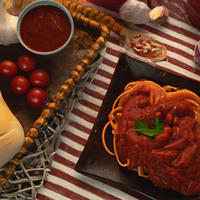
1 serving (300 grams) contains 400 calories, 12.0 grams of protein, 10.0 grams of fat, and 70.0 grams of carbohydrates.

Log this food in SnapCalorie

Nutrition Information
Calories |
315.0 | ||
|---|---|---|---|
% Daily Value* |
|||
| Total Fat | 7.9 g | 10% | |
| Saturated Fat | 1.6 g | 8% | |
| Polyunsaturated Fat | 0 g | ||
| Cholesterol | 0 mg | 0% | |
| Sodium | 472.4 mg | 20% | |
| Total Carbohydrates | 55.1 g | 20% | |
| Dietary Fiber | 3.1 g | 11% | |
| Sugars | 6.3 g | ||
| protein | 9.4 g | 18% | |
| Vitamin D | 0 mcg | 0% | |
| Calcium | 31.5 mg | 2% | |
| Iron | 1.6 mg | 8% | |
| Potassium | 236.2 mg | 5% | |
* Percent Daily Values are based on a 2,000 calorie diet. Your daily values may be higher or lower depending on your calorie needs.
Food Attributes
Source of Calories
About Spaghetti with arrabbiata sauce
Spaghetti with Arrabbiata sauce is a popular Italian dish originating from the Lazio region. 'Arrabbiata' means 'angry' in Italian, referencing the sauce’s spiciness from chili peppers. This dish combines spaghetti pasta with a tomato-based sauce seasoned with garlic, chili, and olive oil. It typically contains moderate amounts of carbohydrates from the pasta and is low in fat when made traditionally, while the tomatoes provide vitamin C and antioxidants. Olive oil adds healthy monounsaturated fats, contributing to heart health. Depending on portion sizes and preparation style, it can be a nutritious, balanced meal when paired with vegetables or lean protein.
Health Benefits
- Tomatoes in the sauce are rich in lycopene, an antioxidant linked to reduced risk of heart disease and certain cancers.
- Olive oil in the recipe provides monounsaturated fats, which support cardiovascular health by improving cholesterol levels.
- Chili peppers contain capsaicin, which may aid in reducing inflammation and boosting metabolic rate.
Dietary Considerations
Selection and Storage
Store cooked spaghetti and sauce in an airtight container in the refrigerator for up to 3 days. Reheat gently on the stovetop or microwave, adding a splash of water if needed to prevent drying.
Common Questions About Spaghetti with arrabbiata sauce Nutrition
What is the nutritional content of spaghetti with arrabbiata sauce?
A standard serving (one cup) of spaghetti with arrabbiata sauce contains approximately 300-400 calories, 8-10 grams of protein, 60-70 grams of carbohydrates, and around 2-4 grams of fat, depending on the recipe. It also offers nutrients like vitamin C and lycopene from the tomatoes, as well as some fiber if whole-grain pasta is used.
Can I eat spaghetti with arrabbiata sauce on a keto diet?
Traditional spaghetti with arrabbiata sauce is not suitable for a keto diet because it is high in carbohydrates, with regular pasta containing around 43 grams of net carbs per cup. However, you can use low-carb pasta alternatives such as zucchini noodles or shirataki noodles to make it keto-friendly.
What are the health benefits of eating spaghetti with arrabbiata sauce?
Arrabbiata sauce, made from tomatoes, garlic, olive oil, and chili peppers, is rich in antioxidants like lycopene, which supports heart health and reduces inflammation. Additionally, the dish provides carbohydrates for energy, although consuming whole-grain pasta can further boost fiber and nutrient intake.
What is a recommended serving size for spaghetti with arrabbiata sauce?
A typical serving size for cooked spaghetti is about one cup, which is roughly 140-200 grams. For a balanced meal, pair it with vegetables or a protein source like grilled chicken or plant-based proteins, depending on your dietary preferences.
How does spaghetti with arrabbiata sauce compare to similar pasta dishes?
Compared to creamy pasta dishes like Alfredo, spaghetti with arrabbiata sauce is lower in calories and fat because it is tomato-based and does not rely on cream or cheese. It is also spicier due to the chili peppers, making it a lighter and more flavorful option.