
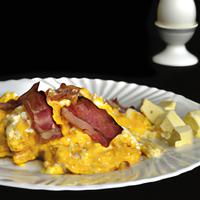
1 serving (150 grams) contains 300 calories, 18.0 grams of protein, 25.0 grams of fat, and 2.0 grams of carbohydrates.

Log this food in SnapCalorie

Nutrition Information
Calories |
473.2 | ||
|---|---|---|---|
% Daily Value* |
|||
| Total Fat | 39.4 g | 50% | |
| Saturated Fat | 15.8 g | 79% | |
| Polyunsaturated Fat | 0 g | ||
| Cholesterol | 394.3 mg | 131% | |
| Sodium | 946.4 mg | 41% | |
| Total Carbohydrates | 3.2 g | 1% | |
| Dietary Fiber | 0 g | 0% | |
| Sugars | 1.6 g | ||
| protein | 28.4 g | 56% | |
| Vitamin D | 126.2 mcg | 631% | |
| Calcium | 236.6 mg | 18% | |
| Iron | 2.4 mg | 13% | |
| Potassium | 315.5 mg | 6% | |
* Percent Daily Values are based on a 2,000 calorie diet. Your daily values may be higher or lower depending on your calorie needs.
Food Attributes
Source of Calories
About Scrambled eggs with cheese and bacon
Scrambled eggs with cheese and bacon is a popular breakfast dish that originated in Western cuisine, particularly in American and British households. This dish combines lightly cooked eggs, often seasoned with salt and pepper, mixed with shredded cheese and crispy bacon pieces for added flavor and texture. Eggs are rich in high-quality protein and essential nutrients like choline and vitamin D. The cheese contributes calcium and protein, while bacon provides fats and a smoky taste. While nutritionally dense, it is also high in saturated fat and cholesterol, making moderation important. This dish balances macronutrients—protein, fats, and minimal carbohydrates—making it suitable for low-carb diets such as keto.
Health Benefits
- Rich in high-quality protein from eggs, supporting muscle repair and maintenance.
- Contains choline from eggs, vital for brain health and cell membrane function.
- Provides calcium from cheese, supporting strong bones and teeth.
Dietary Considerations
Selection and Storage
Store unused cooked scrambled eggs in an airtight container in the fridge for up to 2 days. Reheat gently to retain texture and avoid overcooking.
Common Questions About Scrambled eggs with cheese and bacon Nutrition
Is scrambled eggs with cheese and bacon high in protein?
Yes, scrambled eggs with cheese and bacon is high in protein. A typical serving (2 large eggs, 1 oz cheese, and 2 strips of bacon) provides around 23-26 grams of protein, making it a great choice for those aiming to meet their protein needs.
Can I eat scrambled eggs with cheese and bacon on a keto diet?
Yes, scrambled eggs with cheese and bacon are suitable for a keto diet. They are low in carbohydrates and high in fats and protein, which align well with the macronutrient requirements of keto. For example, a serving typically contains under 3 grams of carbs.
Are there any health concerns with eating scrambled eggs with cheese and bacon?
While this dish is rich in protein and essential nutrients like vitamin D, B12, and choline, it can also be high in saturated fat and sodium, particularly from the bacon and cheese. It’s best to consume it in moderation, especially for individuals with heart health concerns or dietary restrictions on salt and fat intake.
What is the recommended portion size for scrambled eggs with cheese and bacon?
A recommended portion size is 2 large eggs (140 calories), 1 oz cheese (110 calories), and 2 strips of bacon (80 calories). This serving provides about 330 calories, 23-26 grams of protein, and substantial fats, which can form a satisfying and balanced meal.
How does scrambled eggs with cheese and bacon compare to an omelette with vegetables?
While scrambled eggs with cheese and bacon are higher in protein and fat, an omelette with vegetables is typically lower in calories and saturated fat, and higher in fiber and vitamins. For example, an omelette with spinach and mushrooms might have fewer than 250 calories but provide added nutrients like vitamin C, folate, and antioxidants.