
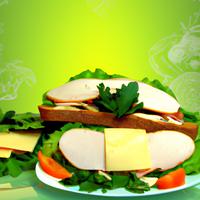
1 serving (150 grams) contains 300 calories, 20.0 grams of protein, 10.0 grams of fat, and 30.0 grams of carbohydrates.

Log this food in SnapCalorie

Nutrition Information
Calories |
473.2 | ||
|---|---|---|---|
% Daily Value* |
|||
| Total Fat | 15.8 g | 20% | |
| Saturated Fat | 7.9 g | 39% | |
| Polyunsaturated Fat | 0 g | ||
| Cholesterol | 63.1 mg | 21% | |
| Sodium | 1261.8 mg | 54% | |
| Total Carbohydrates | 47.3 g | 17% | |
| Dietary Fiber | 3.2 g | 11% | |
| Sugars | 6.3 g | ||
| protein | 31.5 g | 63% | |
| Vitamin D | 0 mcg | 0% | |
| Calcium | 315.5 mg | 24% | |
| Iron | 3.2 mg | 17% | |
| Potassium | 394.3 mg | 8% | |
* Percent Daily Values are based on a 2,000 calorie diet. Your daily values may be higher or lower depending on your calorie needs.
Food Attributes
Source of Calories
About Sandwich with turkey and cheese
A sandwich with turkey and cheese typically consists of sliced turkey breast, cheese, and bread, often accompanied by condiments or vegetables. Originating in American cuisine, it is a versatile meal option suitable for breakfast, lunch, or snacks. Turkey is a lean protein source, while cheese provides calcium and other nutrients. Depending on bread type, sandwiches can also deliver fiber and carbohydrates for energy. The nutritional profile varies widely based on ingredients, but a typical turkey and cheese sandwich is moderate in calories, rich in protein, and provides essential nutrients such as vitamin B12, zinc, and phosphorus.
Health Benefits
- Turkey is high in lean protein, supporting muscle growth and repair.
- Turkey contains vitamin B6 and B12, crucial for brain health and energy metabolism.
- Cheese provides calcium, which supports strong bones and teeth.
- Whole-grain bread (if used) contributes dietary fiber for improved digestion.
- Phosphorus from both turkey and cheese aids in energy production and maintaining healthy tissues.
Dietary Considerations
Selection and Storage
Store the sandwich in the refrigerator for up to 24 hours if ingredients are pre-cooked. Use airtight wrapping to maintain freshness and prevent contamination.
Common Questions About Sandwich with turkey and cheese Nutrition
Is a sandwich with turkey and cheese high in protein?
Yes, a sandwich with turkey and cheese is typically high in protein. Turkey provides around 22 grams of protein per 3-ounce serving, while cheese adds approximately 6-7 grams depending on the type. Combined with the protein from bread, the total protein content can range from 25-35 grams based on portion sizes.
Can I eat a sandwich with turkey and cheese on a keto diet?
A traditional sandwich with turkey and cheese is not keto-friendly due to the bread, which is high in carbohydrates. However, you can make it keto-compatible by using low-carb bread, lettuce wraps, or eliminating the bread entirely and focusing on turkey, cheese, and keto-friendly condiments.
What are the health benefits and concerns of eating a sandwich with turkey and cheese?
Turkey and cheese provide lean protein and calcium, which are beneficial for muscle health and bone strength. However, depending on the cheese type and deli turkey brand, the sandwich can be high in sodium, with some versions exceeding 1,000 mg per serving, which may not suit a low-sodium diet. Opting for reduced-sodium turkey and cheese can mitigate this concern.
What is the recommended serving size for a sandwich with turkey and cheese?
A standard serving size can include 3 ounces of turkey, 1 slice of cheese, and 2 slices of bread. This usually totals around 300-400 calories depending on bread and cheese choices. Adjust portions based on individual dietary needs and goals, such as calorie reduction or higher protein intake.
How does a sandwich with turkey and cheese compare to other protein-rich meals?
Compared to other protein-rich meals like grilled chicken breast with vegetables, a turkey and cheese sandwich is more convenient but may lack fiber and essential nutrients if made without added vegetables or whole-grain bread. It's a balanced choice for portability but including sides like raw veggies can enhance its nutritional profile.