
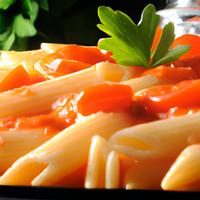
1 serving (250 grams) contains 400 calories, 12.0 grams of protein, 10.0 grams of fat, and 60.0 grams of carbohydrates.

Log this food in SnapCalorie

Nutrition Information
Calories |
377.4 | ||
|---|---|---|---|
% Daily Value* |
|||
| Total Fat | 9.4 g | 12% | |
| Saturated Fat | 4.7 g | 23% | |
| Polyunsaturated Fat | 0 g | ||
| Cholesterol | 18.9 mg | 6% | |
| Sodium | 566.0 mg | 24% | |
| Total Carbohydrates | 56.6 g | 20% | |
| Dietary Fiber | 3.8 g | 13% | |
| Sugars | 7.5 g | ||
| protein | 11.3 g | 22% | |
| Vitamin D | 0 mcg | 0% | |
| Calcium | 94.3 mg | 7% | |
| Iron | 1.9 mg | 10% | |
| Potassium | 377.4 mg | 8% | |
* Percent Daily Values are based on a 2,000 calorie diet. Your daily values may be higher or lower depending on your calorie needs.
Food Attributes
Source of Calories
About Penne pasta with creamy tomato sauce
Penne pasta with creamy tomato sauce is a classic Italian dish commonly enjoyed across the globe. Penne, a tubular pasta of Italian origin, pairs well with rich sauces due to its ridges. The creamy tomato sauce, typically made with tomatoes, cream, garlic, and herbs like basil or oregano, provides a blend of acidity and richness. Nutritionally, a standard serving offers a balance of carbohydrates from the pasta, some protein, and dietary fats from the cream. Tomatoes are an excellent source of vitamin C, potassium, and antioxidants like lycopene, while the cream adds calories from fats, predominantly saturated. It's a comforting and energy-dense meal suitable for active lifestyles when consumed in moderation.
Health Benefits
- Tomatoes in the sauce are rich in lycopene, an antioxidant known to reduce oxidative stress and support heart health.
- The dish provides a good source of carbohydrates for energy, especially beneficial before or after physical activity.
- Cream contributes calcium for bone health, although it should be consumed in moderation due to its saturated fat content.
Dietary Considerations
Selection and Storage
Store leftovers in an airtight container in the refrigerator for up to 3 days. Reheat thoroughly, adding a splash of milk or cream to maintain sauce consistency.
Common Questions About Penne pasta with creamy tomato sauce Nutrition
What is the nutritional content of Penne Pasta with Creamy Tomato Sauce?
A standard serving (about 1 cup) contains roughly 300-400 calories, 8-10g protein, 10-12g fat, and 45-50g carbohydrates, depending on the recipe. It provides a modest amount of calcium, vitamin C, and iron, especially if enriched pasta and fresh tomatoes are used.
Is Penne Pasta with Creamy Tomato Sauce suitable for a keto or low-carb diet?
Traditional penne pasta is too high in carbohydrates for a keto diet, with about 40-45g of carbs per serving. For a keto or low-carb option, you can substitute the pasta with alternatives like zucchini noodles or shirataki noodles while using low-carb cream options in the sauce.
Are there any health benefits or concerns with eating Penne Pasta with Creamy Tomato Sauce?
This dish can be a good source of energy and provides lycopene from the tomato sauce, which has antioxidant properties. However, the cream component can increase saturated fat intake, so moderation is key, particularly for individuals managing weight or heart health.
What is the recommended portion size for Penne Pasta with Creamy Tomato Sauce?
A typical serving is about 1 to 1.5 cups, which corresponds to around 150-200g. This ensures a balanced portion size without excessive calories, especially when paired with a side of vegetables or a lean protein source.
How does Penne Pasta with Creamy Tomato Sauce compare to other pasta dishes?
This dish tends to have fewer calories than cheese-based pasta (like Alfredo) but more than a simple marinara due to the cream. It’s a middle-ground option and can be made lighter by using low-fat cream or dairy-free substitutes while keeping the same creamy texture.