
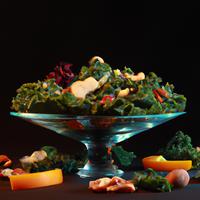
1 serving (150 grams) contains 200 calories, 5.0 grams of protein, 10.0 grams of fat, and 20.0 grams of carbohydrates.

Log this food in SnapCalorie

Nutrition Information
Calories |
200 | ||
|---|---|---|---|
% Daily Value* |
|||
| Total Fat | 10.0 g | 12% | |
| Saturated Fat | 1.5 g | 7% | |
| Polyunsaturated Fat | 0 g | ||
| Cholesterol | 0 mg | 0% | |
| Sodium | 150 mg | 6% | |
| Total Carbohydrates | 20.0 g | 7% | |
| Dietary Fiber | 4.0 g | 14% | |
| Sugars | 8 g | ||
| protein | 5 g | 10% | |
| Vitamin D | 0 mcg | 0% | |
| Calcium | 100.0 mg | 7% | |
| Iron | 1.5 mg | 8% | |
| Potassium | 400.0 mg | 8% | |
* Percent Daily Values are based on a 2,000 calorie diet. Your daily values may be higher or lower depending on your calorie needs.
Food Attributes
Source of Calories
About Kale salad with fruits and nuts
Kale salad with fruits and nuts is a nutrient-dense dish that combines hearty kale leaves with the natural sweetness of fruits and the crunch of nuts. Originating as a modern health-focused dish, it blends supermarket staples into a vibrant mix, commonly associated with Western cuisine but adaptable to many culinary traditions. The dish is rich in vitamins A, C, and K, plus fiber, antioxidants, and healthy fats from the nuts. Kale is a dark leafy green that’s low in calories but high in nutrients, while fruits like apples or berries add natural sugar, vitamin C, and polyphenols. Nuts, such as almonds or walnuts, contribute protein, magnesium, and omega-3 fatty acids, creating a well-rounded and energy-boosting meal.
Health Benefits
- Rich in vitamin K, which supports bone health and proper blood clotting (1 cup of kale provides over 500% of the daily recommended intake).
- High in antioxidants, such as flavonoids and carotenoids, which help reduce inflammation and combat oxidative stress.
- Provides heart-healthy fats, particularly from nuts like walnuts, which are high in omega-3 fatty acids and lower bad LDL cholesterol.
- Contains dietary fiber from kale and fruits, improving digestion and promoting gut health.
- Boosts immune function, thanks to the high vitamin C content in both kale and fruits like oranges or strawberries.
Dietary Considerations
Selection and Storage
Store prepped kale salad in an airtight container in the refrigerator for up to 2 days. Keep dressing separate to prevent sogginess and add fruits or nuts just before serving for optimal texture.
Common Questions About Kale salad with fruits and nuts Nutrition
Is kale salad with fruits and nuts high in protein?
Kale salad with fruits and nuts is moderately low in protein compared to other protein-rich foods. On average, one serving (1-2 cups) contains around 4-6 grams of protein, depending on the type and amount of nuts added, as nuts are the primary protein source in this dish.
Can I eat kale salad with fruits and nuts on a keto diet?
Kale salad with fruits and nuts is usually not ideal for a strict keto diet due to the sugar in fruits like berries or dried fruits, which can increase the carb content. Modifying the recipe by reducing or omitting fruits and focusing on nuts, seeds, and a high-fat dressing can make it more keto-friendly.
What are the health benefits of kale salad with fruits and nuts?
This salad is nutrient-dense, providing vitamins A, C, and K from kale, antioxidants from fruits, and healthy fats from nuts. It supports eye health, boosts immunity, and promotes heart health. However, calorie content can be high if too many nuts or sugary dressings are included, so portion control is key.
What is a recommended serving size for kale salad with fruits and nuts?
A typical serving size is 1-2 cups, depending on your dietary goals and whether the salad is a main or side dish. This portion typically provides around 200-400 calories, depending on the amount of nuts, fruits, and dressing used.
How does kale salad with fruits and nuts compare to spinach salad?
Kale salad is more nutrient-dense than spinach salad, offering higher levels of vitamins A, C, and K. However, spinach is more tender and less bitter than kale. Both salads can be equally healthy, depending on added toppings and dressing, but kale may be harder to digest for some people when eaten raw.